Start here · 8 min read
The families of tea, explained
White, green, yellow, oolong, black and dark tea all come from the same plant. What makes them different is what happens after picking.
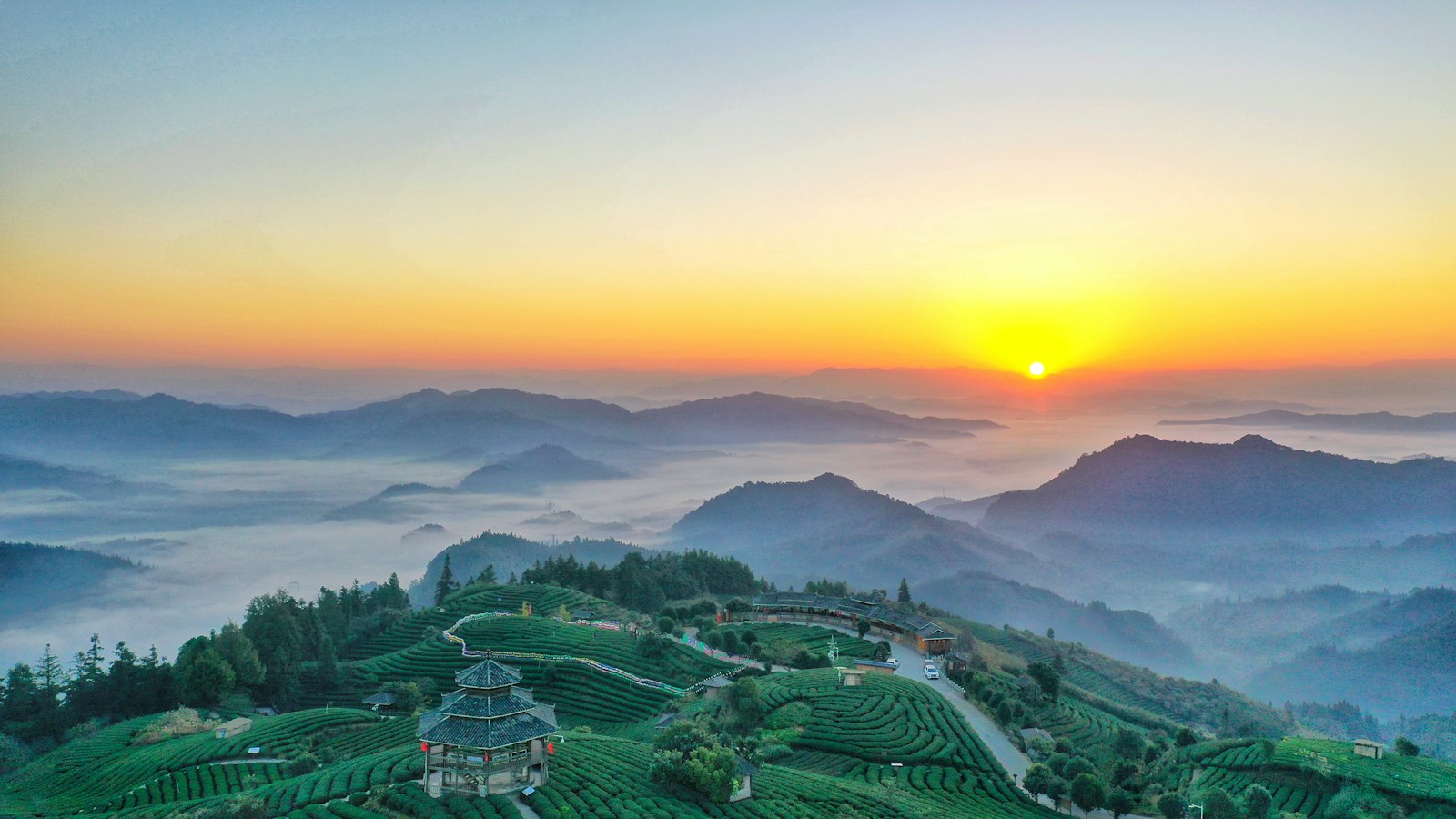
Picked tea leaves start to change straight away. Enzymes in the leaf react with air and the leaf darkens, much as a cut apple turns brown. Tea makers call this oxidation. Whether they stop it, slow it or let it run, and how they shape and dry the leaf, is what creates each family of tea.
White tea
The simplest: leaves and buds are withered, then dried. There is no rolling and no heating step to stop oxidation, so a little happens naturally. Expect soft, sweet, honeyed cups. Classic examples: Silver Needle (buds only) and White Peony (a bud and two leaves), both from Fujian.
Green tea
Heat is applied soon after picking to stop oxidation, keeping the leaf green. In China the leaves are usually pan-fired, giving toasty, nutty notes. In Japan they are steamed, giving grassy, marine and savoury (umami) notes.
Yellow tea
A rare Chinese style. Leaves are processed like green tea, then gently wrapped and kept warm so they “yellow”, which softens any grassiness into a mellow sweetness.
Oolong
Partly oxidised: anywhere from about 10% to 80%. Leaves are shaken or tumbled to bruise their edges, left to oxidise, then heated and rolled. Some are also roasted over charcoal. That range explains why oolong can be floral and green (Taiwanese high-mountain) or dark and toasty (Wuyi rock tea).
Black tea
Fully oxidised, giving a dark leaf and a reddish cup. In China it is called hong cha, “red tea”, after the colour of the liquor. Assam, Darjeeling, Ceylon, Kenya and Yunnan are among the great black tea regions.
Dark tea and pu-erh
These teas are changed by microbes as well as air, and many are aged for years. Pu-erh from Yunnan comes in two styles: raw (sheng), which is sun-dried and ages slowly and naturally, and ripe (shou), which is piled and kept damp for weeks to ferment, a method developed in the 1970s to give a dark, mellow tea quickly.
And the herbals
Chamomile, peppermint, rooibos, hibiscus and yerba mate are not from the tea plant at all. Tea people call them tisanes or herbal infusions. They are brewed hotter and longer, and most are naturally caffeine-free (mate is the big exception).
| Family | Oxidation | Typical taste |
|---|---|---|
| White | Very light, natural | Honey, hay, melon |
| Green | Stopped early | Nutty, grassy, savoury |
| Yellow | Stopped, then gently yellowed | Mellow, sweet |
| Oolong | Partial, 10–80% | Floral to toasty |
| Black | Full | Malt, fruit, cocoa |
| Dark / pu-erh | Plus microbial change and ageing | Earthy, woody, deep |
On the road: Xishuangbanna, Yunnan, West Lake, Hangzhou and Kericho highlands.